



Advertising master John Wanamaker once famously said: dddhhhHalf the money I spend on advertising is wasted; the trouble is I don't know which half.dddhhh
In the era of information overload, capturing user attention has become increasingly difficult. Traditional advertising media relying on broad coverage still struggle to escape this dilemma. As a result, more and more brands are shifting their marketing focus toward precision targeting.
Amid this trend, offline small screens—represented by smart shelf displays, interactive terminals, and compact digital signage—are emerging as crucial vehicles for precision marketing. Leveraging their exact touchpoint capabilities and seamless scene integration, they enable brands to reach consumers with unprecedented accuracy.
Part 1: Scene Precision—Embedding at Critical Decision Points
Traditional large-screen marketing follows a plaza logic: relying on crowd aggregation, capturing fleeting attention through visual impact, and pursuing maximum exposure reach.
Offline small screens, however, play an entirely different game. Their core value lies in acting like a scalpel—precisely cutting into the critical nodes of the consumer decision chain.

The Touchpoint Logic of Small Screens
Unlike traditional large screens that broadcast to all, offline small screens aim not to be seen by everyone, but by those who need to see them. They strive to become precise touchpoints within the consumer's decision path.
This precision manifests in scenarios where consumers generate specific needs and make decisions—providing perfectly matched information and services at the right moment.

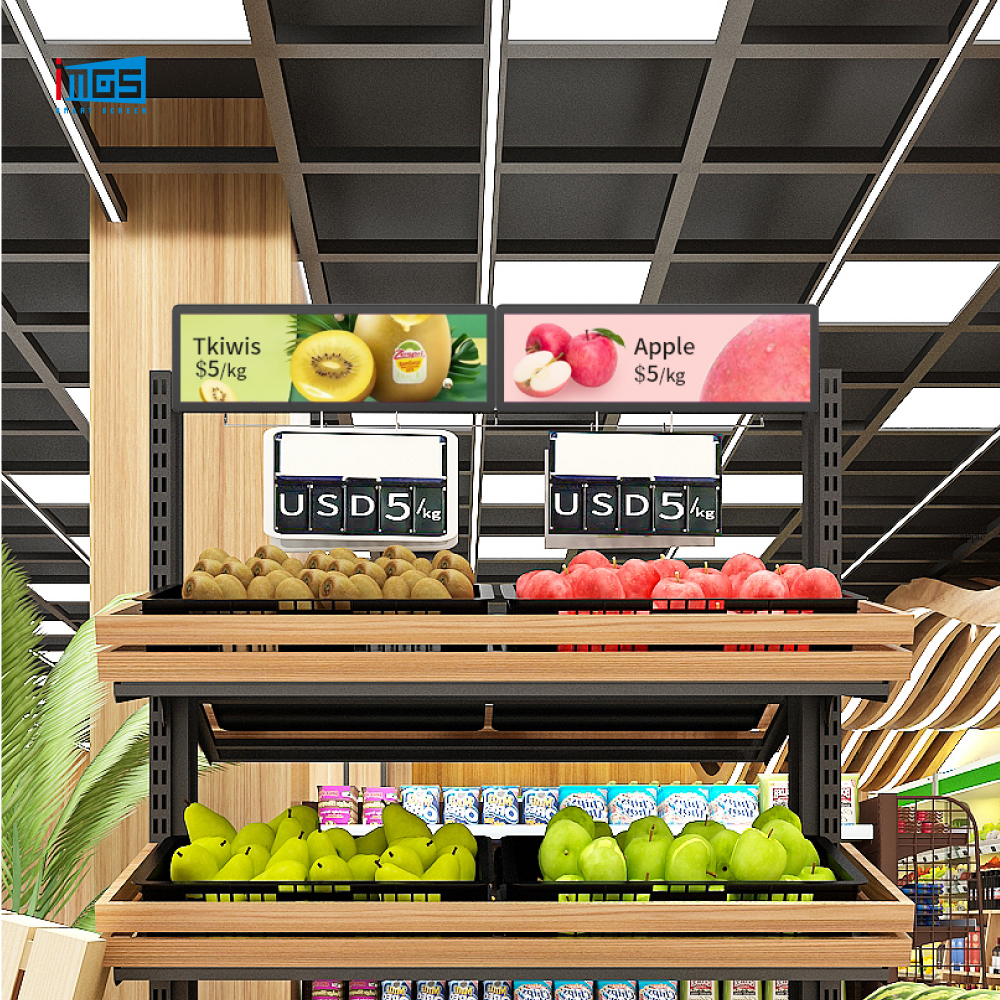
The most typical example is shelf screens in retail environments. When consumers have already paused in front of shelves, nearby small screens can instantly present product information, promotional content, or usage demonstrations—directly influencing the final push of purchase decisions.
The Right Presence at the Right Time
In retail scenarios, small screens often work in high synergy with their surroundings. They can be deployed in corners unreachable by traditional media, flexibly integrating into shelf gaps, beside checkout counters, or around products—becoming natural components of the shopping journey.
Those positions once considered advertising dead zones are now, through small screen embedding, flexibly filling physical spatial gaps and transforming into effective information touchpoints.
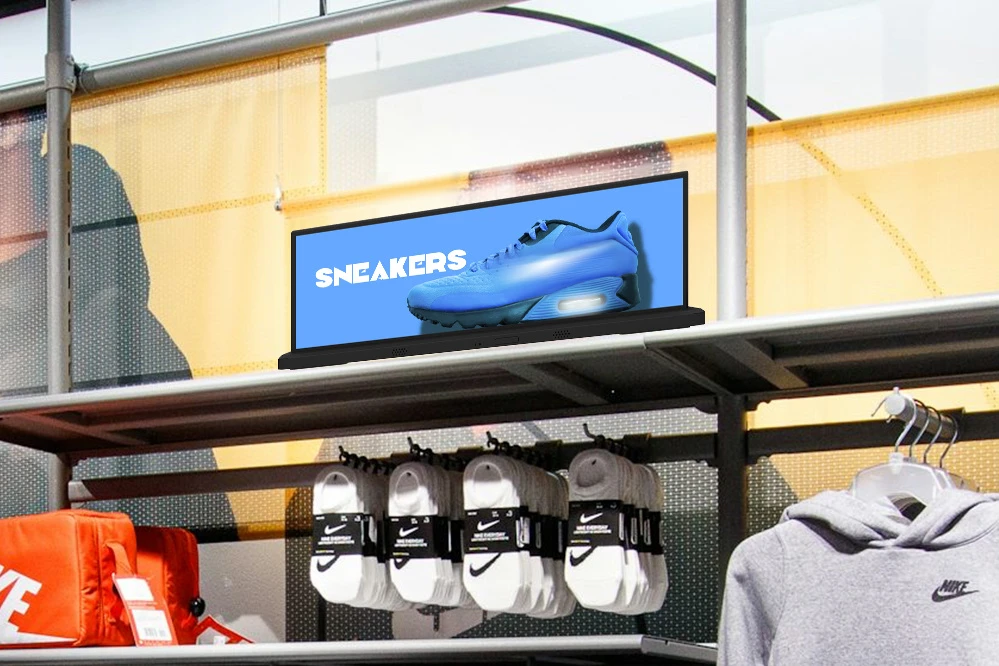
◎ iMGS bar screen integrated into shelving.
Through deep scene integration, offline small screens upgrade traditional marketing from broadcasting to precise response. This perfect sense of presence transforms screens from easily overlooked objects into organic components of the scene itself.
Part 2: Content Precision—Real-Time Scene Matching
In retail scenarios, when screens are positioned appropriately, content precision becomes the key to their effectiveness.
Real-Time Content, Precisely Linked to Scenes
Through cloud-based playback control system presets, small screen content is no longer static loop playback, but can match real-time relevant content according to segmented scenarios.
For example, a screen installed beside a beverage shelf serves the primary purpose of supporting beverage selection scenarios. Therefore, its content library and playback logic are entirely built around this core.
The screen content itself becomes an information extension of the product. This precise alignment between content and spatiotemporal context transforms marketing messages into scene-appropriate services, greatly enhancing information relevance and acceptance.

Content in Sync with Reality
Through real-time data sensing, screens can break free from preset content limitations and integrate into dynamically changing physical environments.
For instance, a small screen above a convenience store cooler can automatically switch to dynamic ads for iced beverages when temperature sensors detect a sudden rise—emphasizing thirst-quenching and cooling effects.

This content response mechanism based on environmental states makes screens dddhhhperceptivedddhhh intelligent terminals, achieving resonance between content and real-world scenarios.
Unlike posters that cannot be changed once posted, small screens enable high locking between location and content. Content scope is determined by location, creating tight associations between information and products.
Part 3: Precision Marketing—Targeting Preferences
Focusing on Precise Audiences
The precision of offline small screens lies in their ability to dddhhhread the roomdddhhh—serving not the general masses, but individuals with clear intentions in specific scenarios.
In retail environments, small screens provide information when consumers need it, display appropriate content in suitable environments, and give the right nudge at critical decision moments.
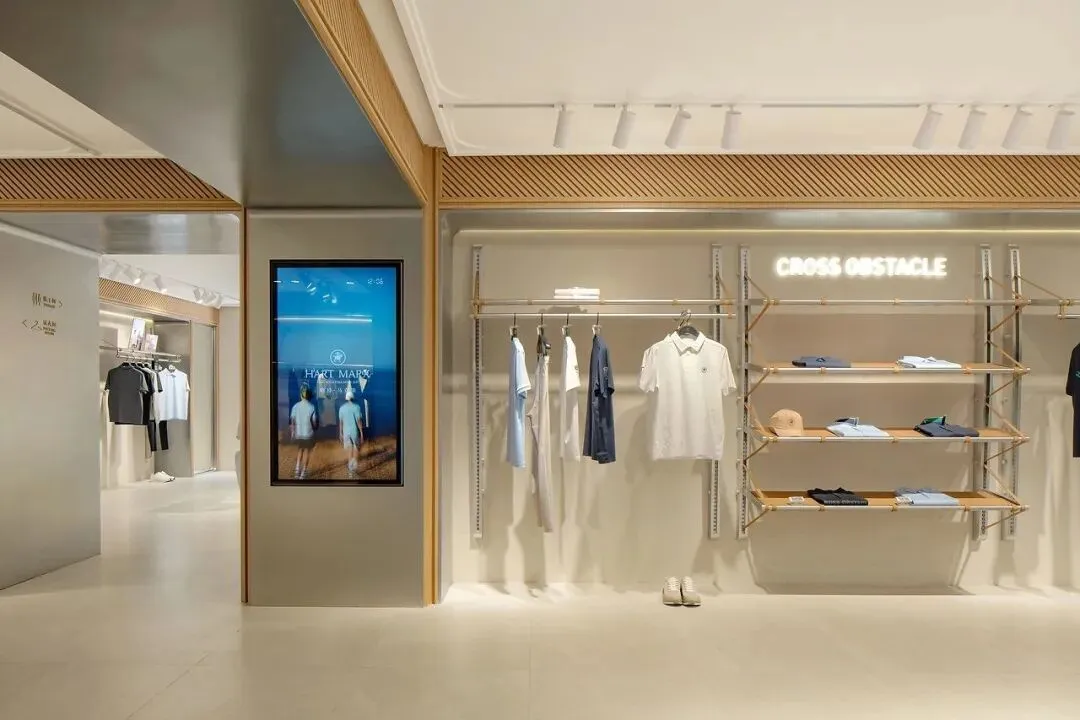
Large Screens Attract, Small Screens Convert
When consumer attention is fragmented, single screens cannot fully capture peripheral vision, nor can they carry the complete chain from building awareness, stimulating interest, to driving conversion.
Therefore, offline small screens do not exist in isolation. Together with large screens that create brand atmosphere, they form a three-dimensional, integrated marketing ecosystem.
In this system, brand large screens are responsible for building awareness, conveying concepts, and weaving broad interest networks. The core role of offline small screens is to inherit and convert this accumulated brand awareness and purchase intention—providing precise information and services in final decision scenarios.
Macro Perspective: Flexibility Enables Precision
From a macro view, the precision of offline small screens stems from their inherent flexibility: both the physical agility for easy embedding and the intelligence for dynamic information presentation.
These two flexibilities catalyze each other. The lightweight form enables embedding into diverse scenarios as natural components, while content adapts highly to its environment for dynamic matching.

This dual flexibility of form and information together grants offline small screens a unique ecological niche—enabling them to form marketing combinations with large screens and jointly complete the critical link from brand awareness to sales conversion.